Soft, light and instantly recognisable to the touch, cashmere is one of the most prized natural fibres in the world of textiles. We are used to encountering it above all in fashion, where for centuries it has been used for garments that give warmth without the weight and bulk of heavier materials. Yet the very qualities that established its value in clothing are now finding a compelling place in interior design as well.
Upholstery, cushions, throws and other textile pieces allow cashmere to enter a room through the material itself, bringing softness and depth to its surfaces.
Its value, however, is not simply a matter of how pleasant it feels. Behind a cashmere fabric lie an unusual raw material, limited availability and a complex manufacturing process. Knowing where it comes from helps explain why this fibre holds such a singular place in the world of textiles.
A fibre born to protect against the climate
Unlike wool, traditionally obtained from sheep, cashmere comes from the undercoat of goats belonging to populations adapted to the harsh climatic conditions of certain regions of Asia.
Their coat consists of a coarser outer layer and, beneath it, a layer of much finer, softer fibres. It is this undercoat that supplies the raw material for cashmere.
The fibre is generally gathered during the spring moult. What is collected, however, contains both the fine fibres and the coarser hairs, and must therefore go through a separation stage, commonly known as dehairing, before any further processing.
The amount of fine fibre each animal yields is relatively small. Add to this the selection of the raw material and the many stages needed to turn it first into yarn and then into fabric, and you have some of the factors behind the rarity and economic value of quality cashmere.
But not all cashmere is the same
The fineness, length and uniformity of the fibres, the colour of the raw material and the quality of the processing can all significantly affect the end result. The mere presence of the word “cashmere” in a composition, then, does not necessarily tell you the overall quality of a fabric.
From wardrobe to home
When a fibre so closely associated with clothing enters interior design, the way it is used inevitably changes.
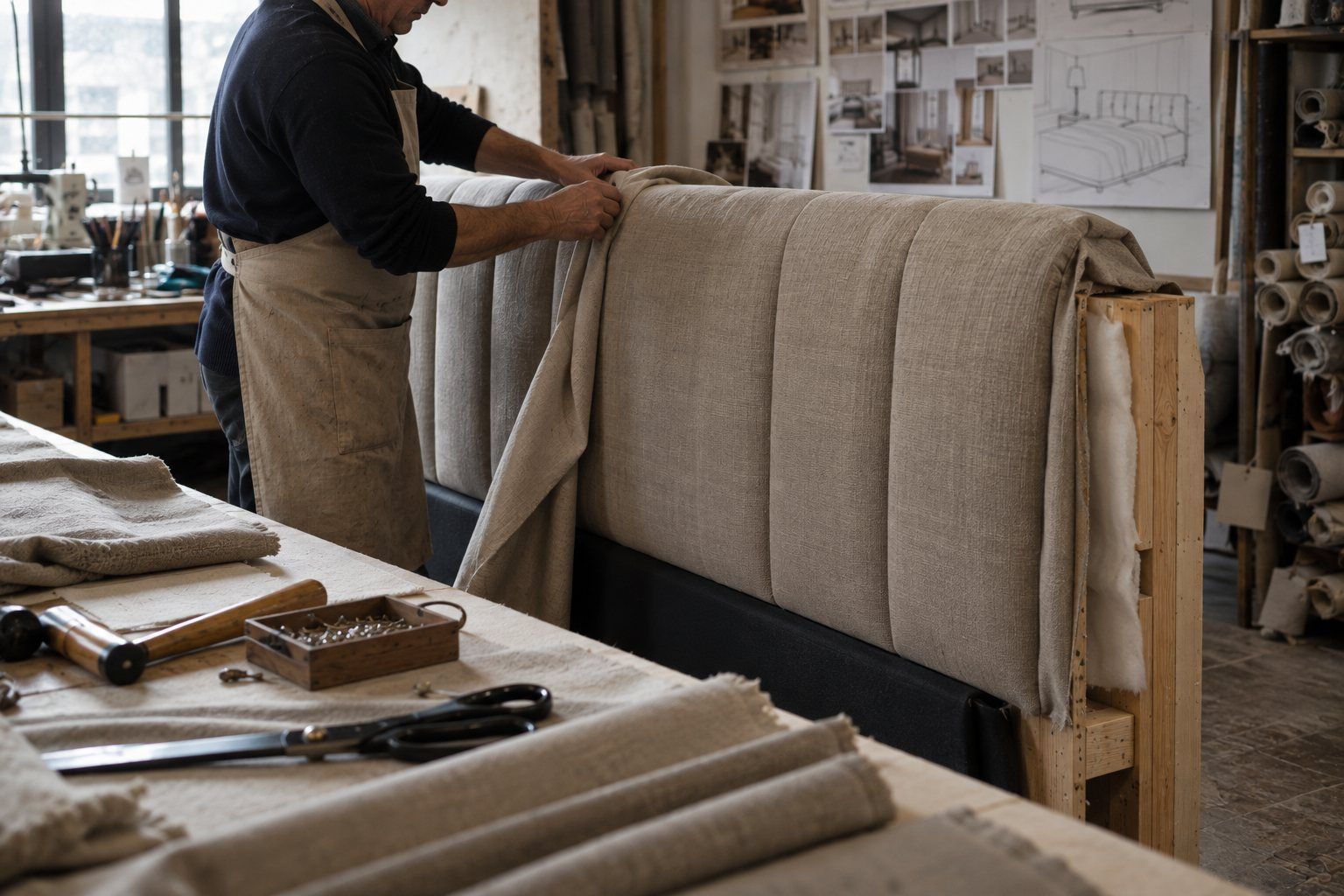
A garment is worn and constantly follows the movement of the body. A furnishing fabric, by contrast, has to contend with larger surfaces, structured shapes and, in some cases, prolonged daily use. This is why the decision to use cashmere in interiors should always be tied to what the fabric is intended for.
A throw or a decorative cushion has different requirements from the upholstery of an armchair used every day. In the same way, a seat intended for a private home is not subjected to the same stresses as a piece placed in a high-traffic space.
Cashmere can be used pure, but it can also be blended with other fibres. Blends should not automatically be seen as a lesser version of the material: in textiles, combining different fibres makes it possible to achieve specific properties and can make a fabric better suited to the function for which it was designed.
It is therefore the relationship between composition, fabric construction and intended use that determines whether a given option is genuinely right for the project.
The value of material in interior design
There is also a more strictly design-led reason why cashmere has found a place in contemporary interiors. A room is not perceived through form and colour alone. Smooth or textured, matt or lustrous, dense or soft, surfaces alter the way we read a space and the relationship we form with the objects within it.
In this sense, fabric is not merely the final stage of decoration; it can profoundly change the presence of a piece of furniture.
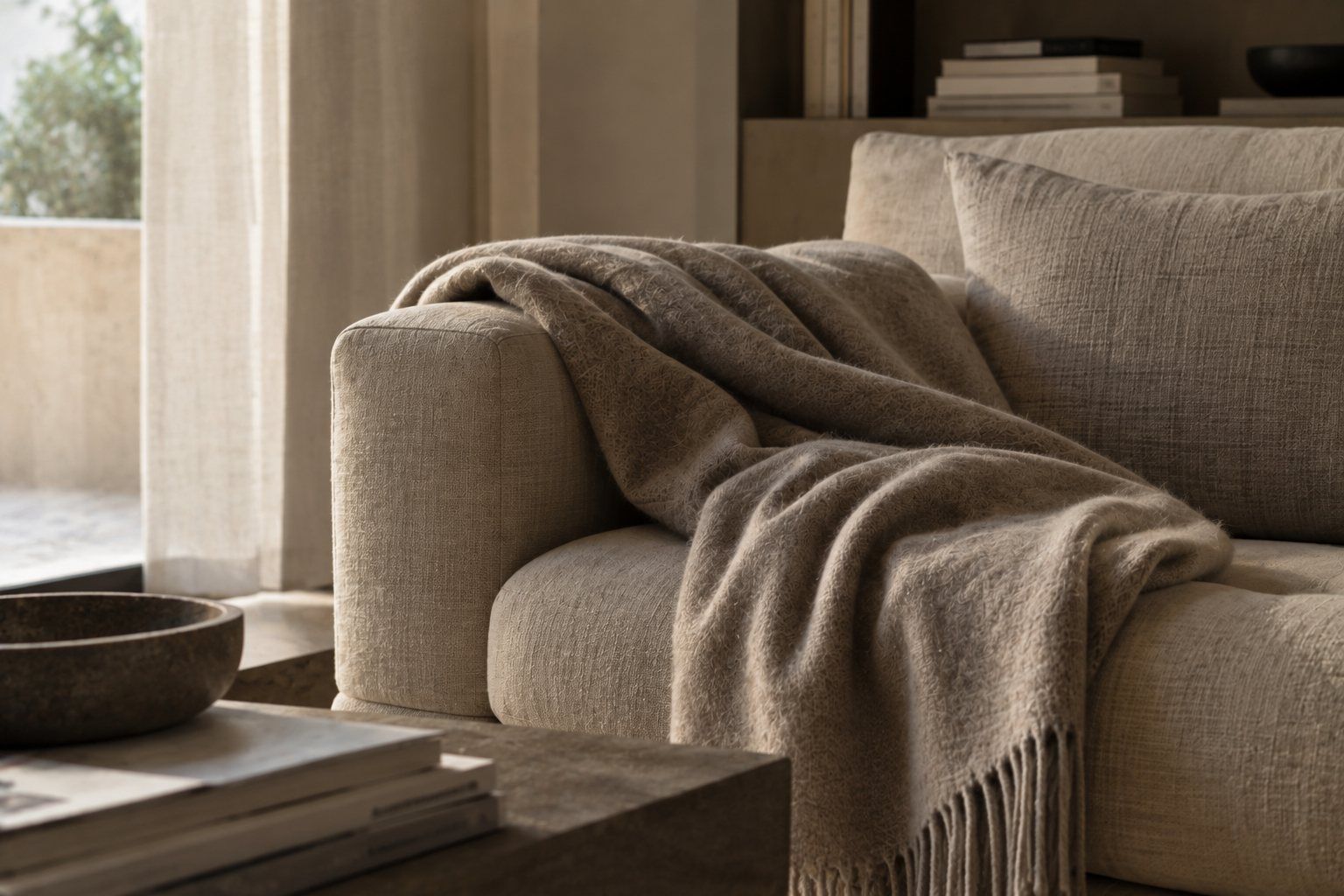
The same armchair covered in two different fabrics can take on an entirely different character while keeping exactly the same structure and proportions. With a fibre such as cashmere, this effect comes above all through the hand and the surface – qualities that become especially apparent when the fabric is seen up close and, above all, touched.
It is an approach to interiors in which value does not necessarily come from an abundance of pieces or from overt decoration. On the contrary, fewer elements can leave more room for the quality of the materials.
An interior built on neutral tones, for example, can gain depth through the pairing of different surfaces: wood, stone, metal and fabrics with varied hands and textures. Cashmere can find its place precisely within this dialogue, introducing a soft, tactile note without necessarily calling for particularly assertive colours or patterns.
Where to use cashmere in interiors
A precious fibre need not be used everywhere. Indeed, it is often a measured use that shows it to best advantage.
Throws and blankets are probably among the most immediate applications, as they let you appreciate its lightness and softness at first hand. Cushions and other soft furnishings also allow it to be introduced discreetly into a bedroom or living area.
When it comes to covering seating and upholstered pieces, however, assessing the specific characteristics of the fabric becomes all the more important. Choosing a composition because it feels pleasant is not enough: you need to consider the durability required, how often the piece will be used and the manufacturer’s recommendations for that particular reference.
It is the same principle that ought to guide the choice of any furnishing fabric: starting from aesthetics is natural, but stopping at aesthetics means considering only part of the project.
A luxury felt before it is recognised
Cashmere neatly captures a broader shift in how luxury is understood in interiors. Not necessarily showy materials or instantly recognisable pieces, but greater attention to what is perceived through the everyday experience of a space.
A quality fibre may not be identifiable from a distance. Its value emerges as you draw closer, observe its surface, touch it and understand how it has been used.
And it is perhaps precisely this discretion that makes it so interesting in interior design.
Choosing cashmere for an interior is not simply a matter of introducing a precious fibre. It means deciding that the sensation a surface gives back should also be part of the design. Because a room is not made only of what we see. It is also made of the materials we come into contact with every day, of their texture, of the way they change with the light and of the sensations they offer over time.
And it is in this quieter, more sensory dimension that cashmere perhaps finds its most compelling expression in the home.