A bespoke upholstered piece begins long before the fabric is chosen. It may start from a precise drawing, a design requirement, the particular proportions of a space, or simply the wish to make something that does not already exist in a collection.
A bed, a headboard, a bench or a seat can thus be designed around the room that will receive it, rather than the room having to adapt to dimensions and features already fixed. This is the most interesting distinction of bespoke work: not choosing from what exists, but building what is needed.
It all begins with the design
The first step is to turn an idea into something that can actually be made.
Dimensions and proportions are, of course, fundamental, but they are not the only things to consider. You also have to weigh up the function of the piece, how it will be used, the level of comfort desired and its relationship with the other elements in the space.
A headboard designed to span an entire wall, for example, calls for different considerations from a traditional one. Likewise, a bench set into a niche, a bed made to a drawing or a seat for a hospitality project must each answer specific needs.
The project may come directly from the client or be developed together with architects and interior designers. Either way, craftsmanship makes it possible to translate a drawing into a real object, checking its feasibility, proportions and construction details.
And it is precisely at this stage that the idea of “made to measure” takes on a broader meaning: it is not only about centimetres, but about the way every choice is adapted to the project.
Frame, padding and fabric: what gives the project its shape
Once shapes and dimensions are settled, construction proper begins.
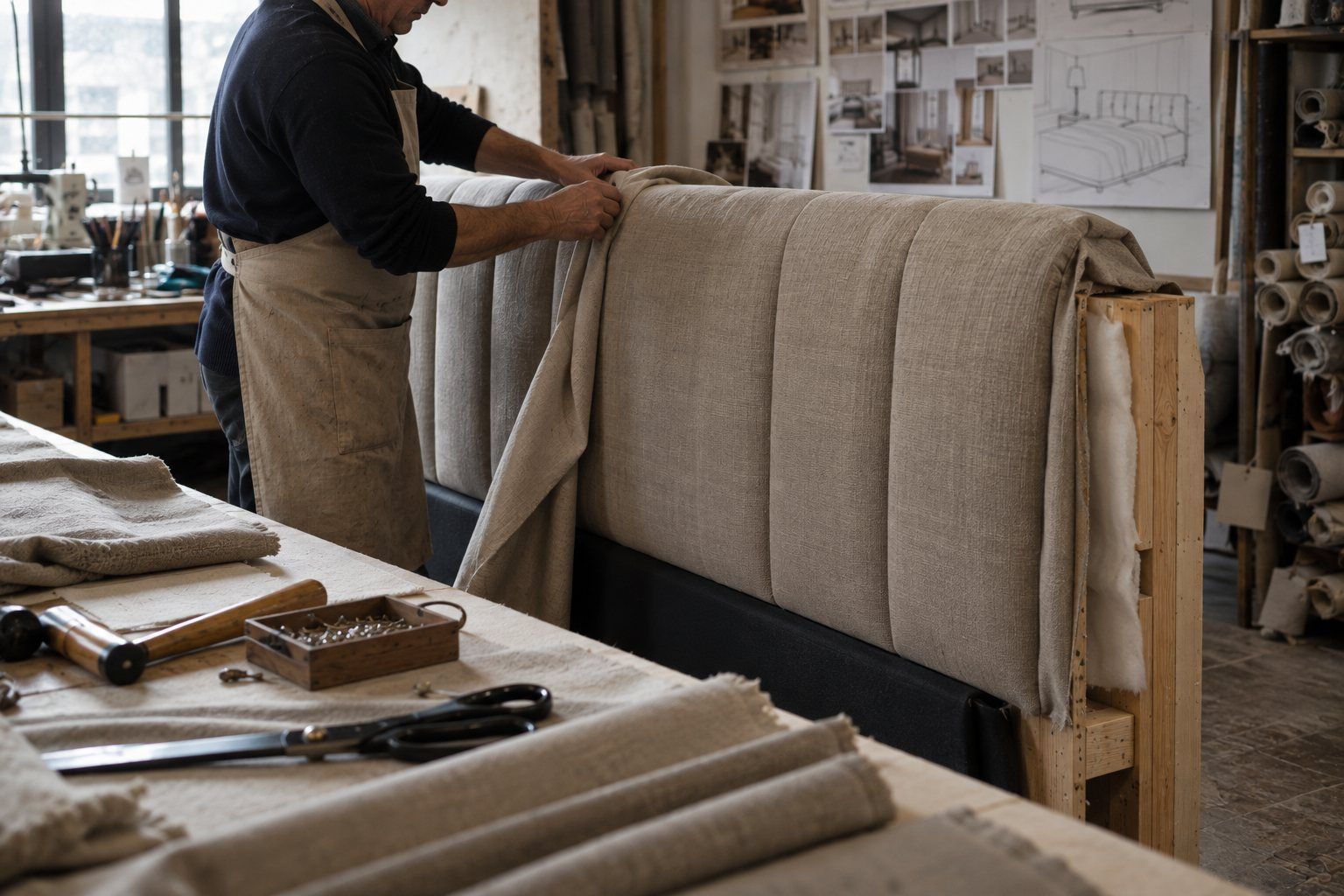
The frame is the skeleton of the piece and must be conceived in relation to its final form, its use and the stresses it will have to bear. On it the various layers of padding are then built up, defining the volume, softness and profile of the piece.
It is a stage that often remains barely visible in the finished piece, yet it is decisive. Two upholstered pieces of seemingly similar size can feel very different and read very differently in proportion, precisely because of the way they have been built inside.
Only at this point does the fabric take centre stage.
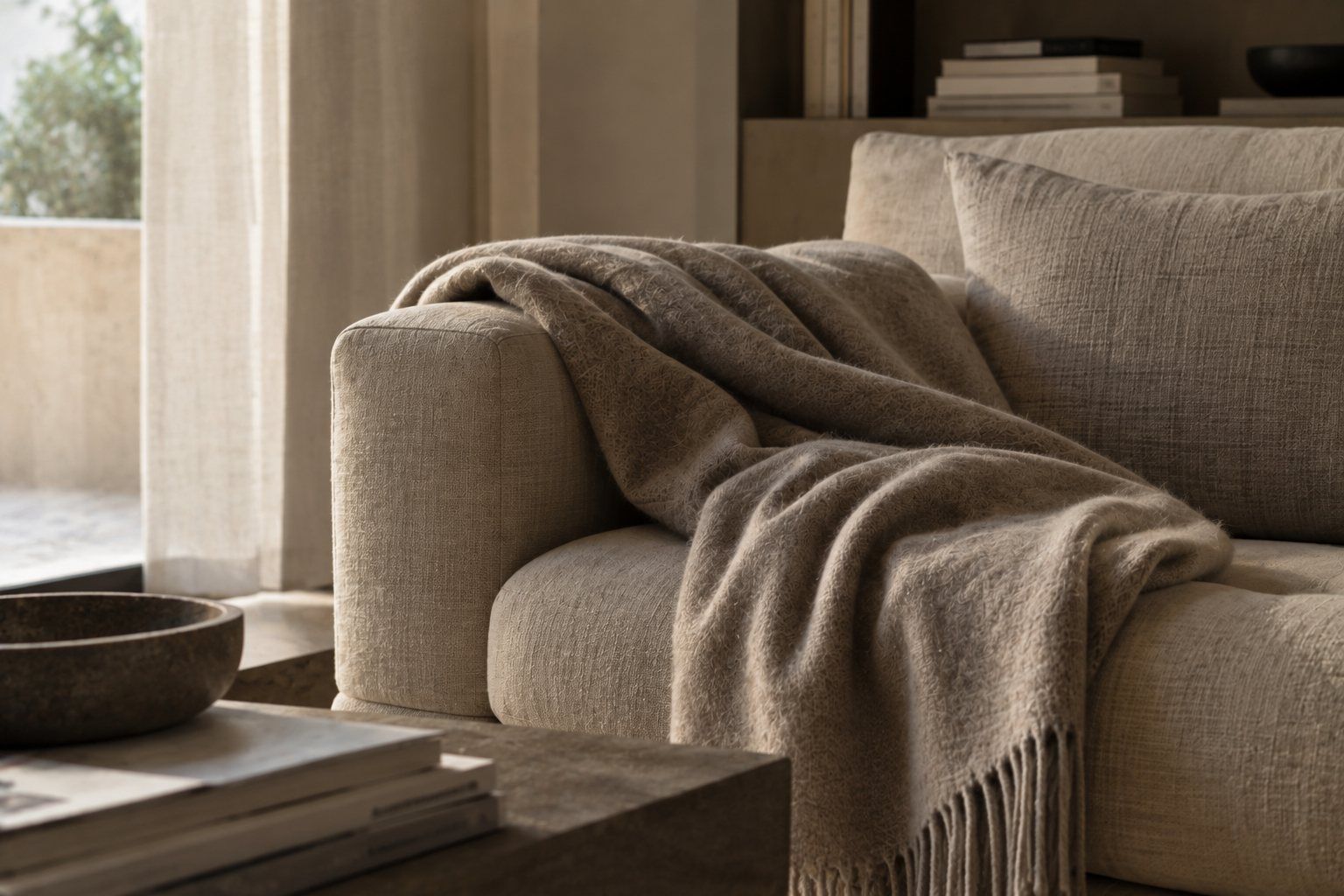
Choosing it naturally means fitting it into the colour and material language of the room, but also assessing its properties in relation to the object it will cover. Weight, elasticity, weave, pattern and end use all affect the result and must work in dialogue with the forms of the piece.
A patterned fabric may call for precise placement of the motif; a strongly textured fabric may flatter some volumes more than others; trims, stitching, piping and other details, meanwhile, can alter the final character, sometimes considerably.
The covering, then, is not simply applied to the object: it becomes part of its design.
When bespoke becomes part of the space
The value of a bespoke upholstered piece emerges above all in its relationship with the room.
It need not be complex or especially decorative. Sometimes the most successful result comes precisely from being able to control a few details: an exact width, a height judged in relation to the wall, a particular depth or the continuity between several elements.
In other projects, by contrast, the upholstered piece can become one of the defining features of the space. A large fabric headboard can define the entire bedroom wall; a bench can follow the exact dimensions of a niche; a bed can be designed – in its proportions, its covering and its details – to converse with everything around it.
This is where craftsmanship and design meet.
In our workshop we make bespoke upholstery starting from the needs of each individual project and overseeing its every stage in-house, from the initial definition through to construction and the final covering. The result is therefore not the adaptation of a standard product, but a sequence of choices built around the space and the people who will live in it.