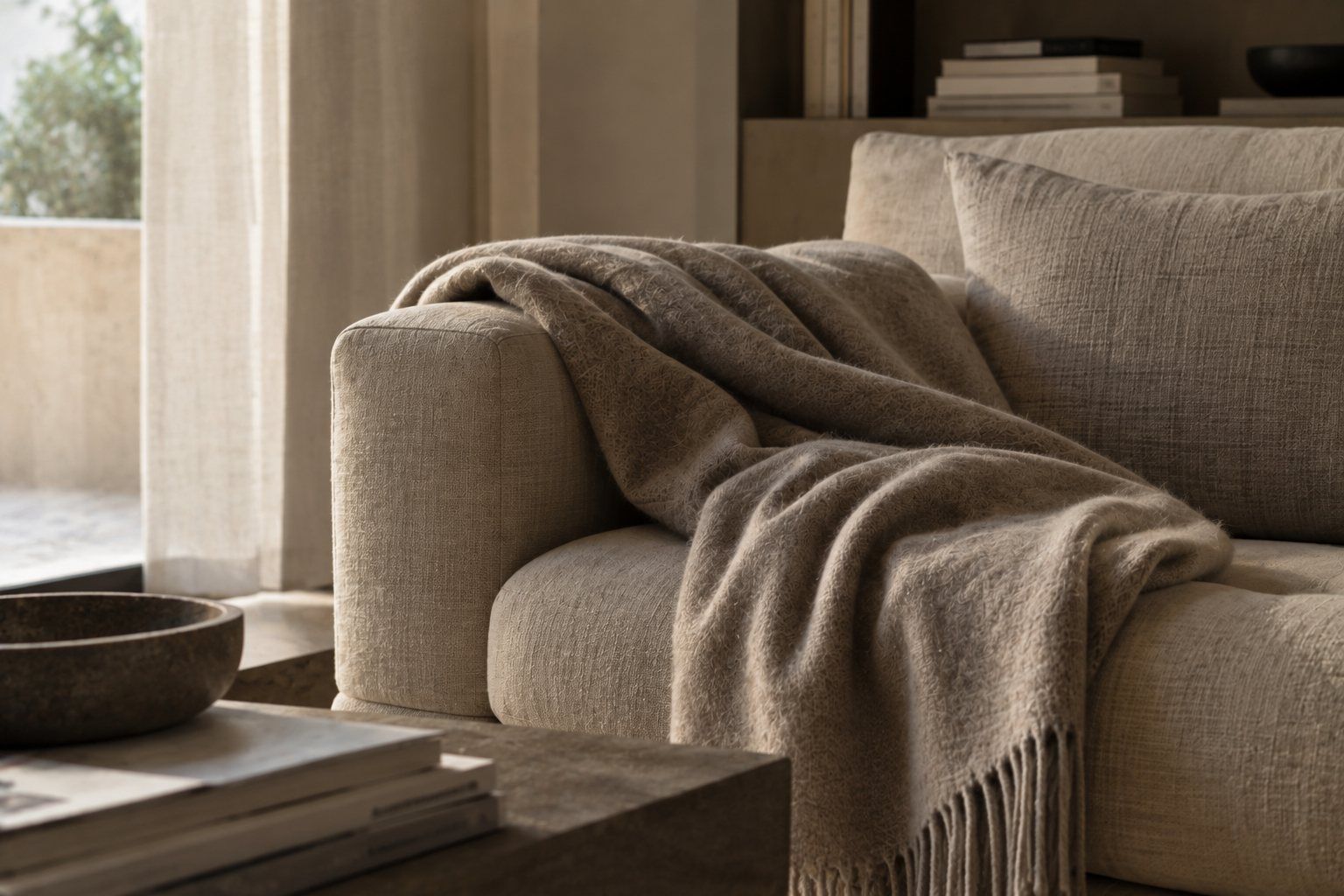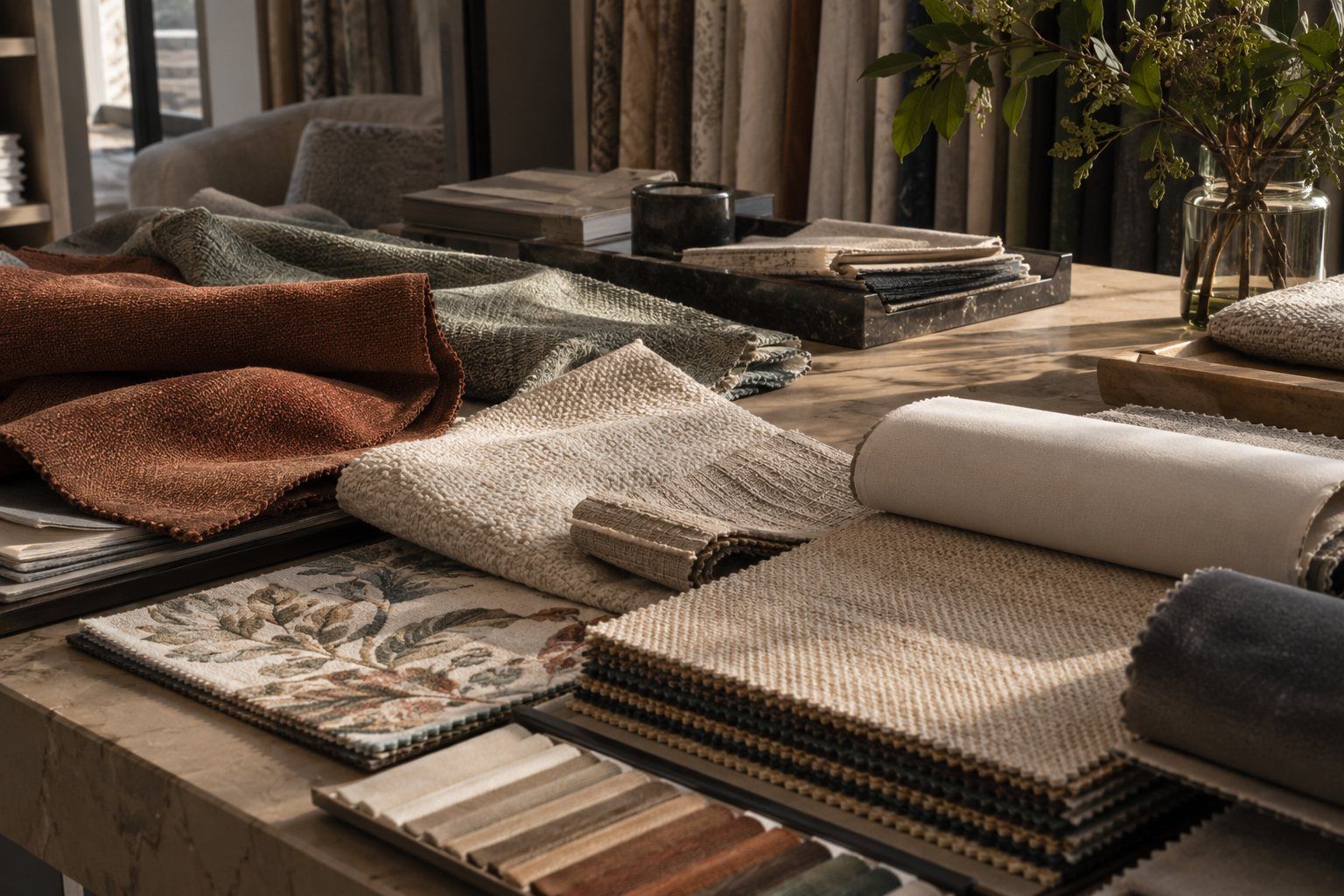
Two fabrics can look very much alike and yet carry entirely different prices. Sometimes they even share the same colour, the same composition or a seemingly similar pattern. The difference, however, may lie in everything that happened before that fabric ever came into view.
To call a fabric “fine” solely on the basis of the fibre used or its cost would be reductive. Its value is the outcome of a supply chain built on selection, expertise, processing and control, in which every step contributes to the final result.
Quality begins before weaving
Every fabric starts with its raw material, but it is the way that material is selected and transformed that determines much of its character.
Fibres of the same type can differ in fineness, length, uniformity and quality. Then comes spinning: the twist, evenness and characteristics of the yarn affect how the material can be woven and how it will look once finished. It is therefore possible to start from seemingly similar materials and arrive at profoundly different results.
This is also why the composition given on the technical sheet tells only part of the story. Two fabrics described as, say, 100% wool or 100% linen are not necessarily equivalent in quality, workmanship or production complexity.
Construction makes the difference
It is on the loom that yarn acquires structure. Weave, density and the interlacing of the threads determine the fabric’s identity. Some constructions are relatively simple; others demand far more elaborate work, especially when the pattern is not applied to the surface afterwards but emerges directly from the interlacing of different threads.
Jacquards, damasks, velvets and fabrics with intricate motifs can require great precision and many production stages. Particularly elaborate designs must also hold their proportions, continuity and definition along the entire length of the bolt.
Colour, too, can be the result of very different processes. Dyeing may take place at the fibre, yarn or finished-fabric stage, while certain colour effects come from combining threads of different shades. Depending on the technique, the depth, the evenness and the way the surface responds to light all change.
All this is followed by finishing – the treatments carried out after weaving that can alter the appearance and properties of the material: washing, raising, calendering and many other processes are chosen according to the desired result.
The fabric we see is therefore only the last visible stage of a far more complex process.
Quality also means precision
Another, less obvious factor is the consistency of the result.
Producing a quality fabric means being able to maintain certain characteristics throughout the entire production run: regularity of weave, evenness of colour, dimensional stability and compliance with the required standards.
Depending on the type of fabric and its intended use, tests may also be carried out to measure specific properties such as abrasion resistance, pilling, and colour fastness to light or rubbing.
These figures rarely determine a fabric’s value on their own, but they give a clearer understanding of how it behaves and form an important part of the work that precedes its sale.
Quality, then, does not necessarily mean absolute perfection of the surface. In some fabrics, especially where particular fibres and techniques define their look, small irregularities can be part of the material’s very identity. What matters is telling an intended characteristic apart from a manufacturing flaw.
Does the price reflect all this?
Not necessarily. A high price alone does not guarantee the quality of a fabric.
At the same time, behind certain high-end fabrics there may be carefully selected raw materials, special yarns, complex workmanship, research into colour and design, testing and production processes that inevitably bear on the final cost. This is what makes it worthwhile to look at a fabric beyond the first impression. Excellence does not reside in any single characteristic, but in the quality with which every stage is handled, from the initial material to the very last finish.
Understanding these elements also allows you to choose with greater awareness. For behind a surface that may seem simple there can lie expertise, workmanship and research built up over many stages. And it is often precisely what cannot be seen at once that makes the difference between an ordinary fabric and a truly fine one.