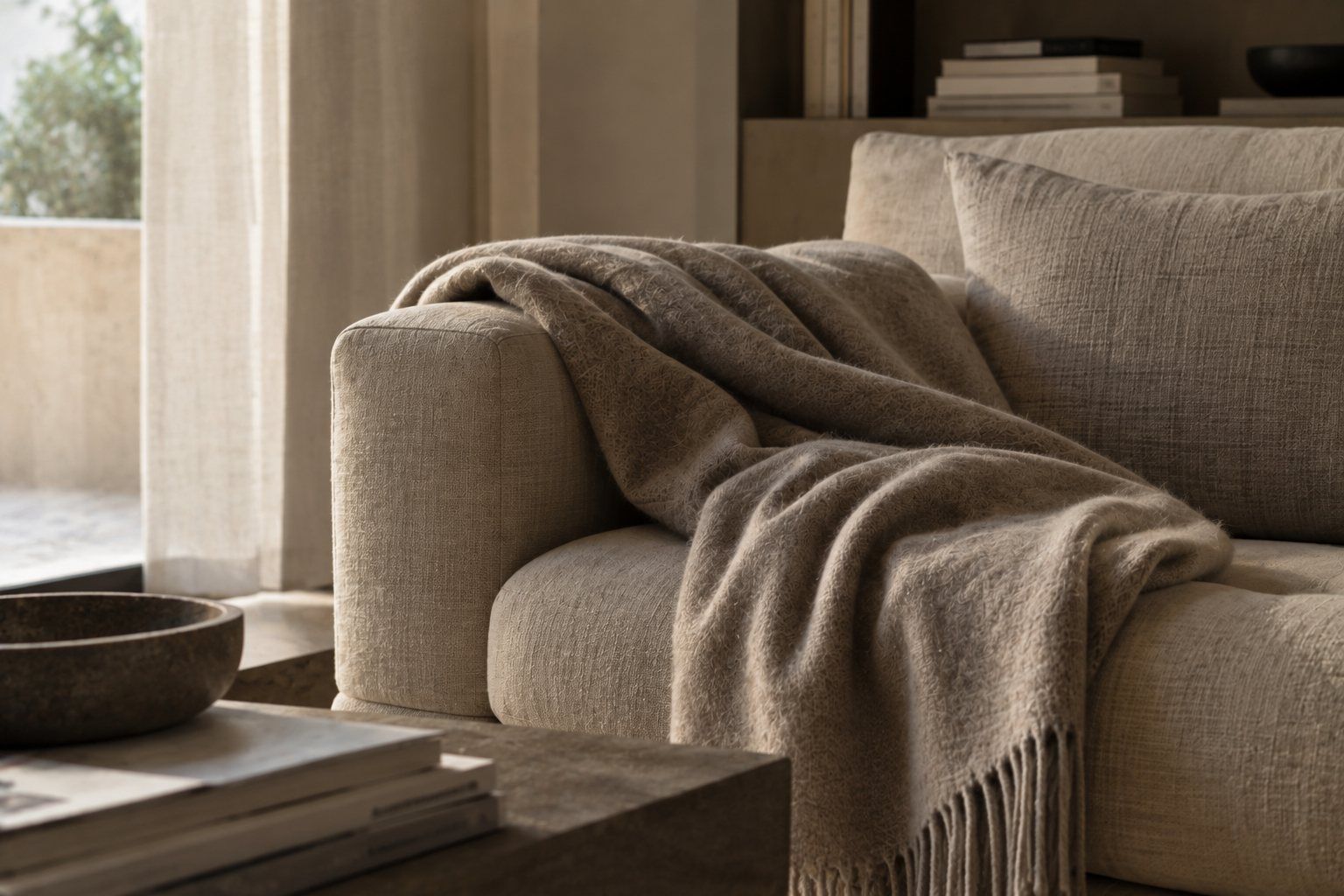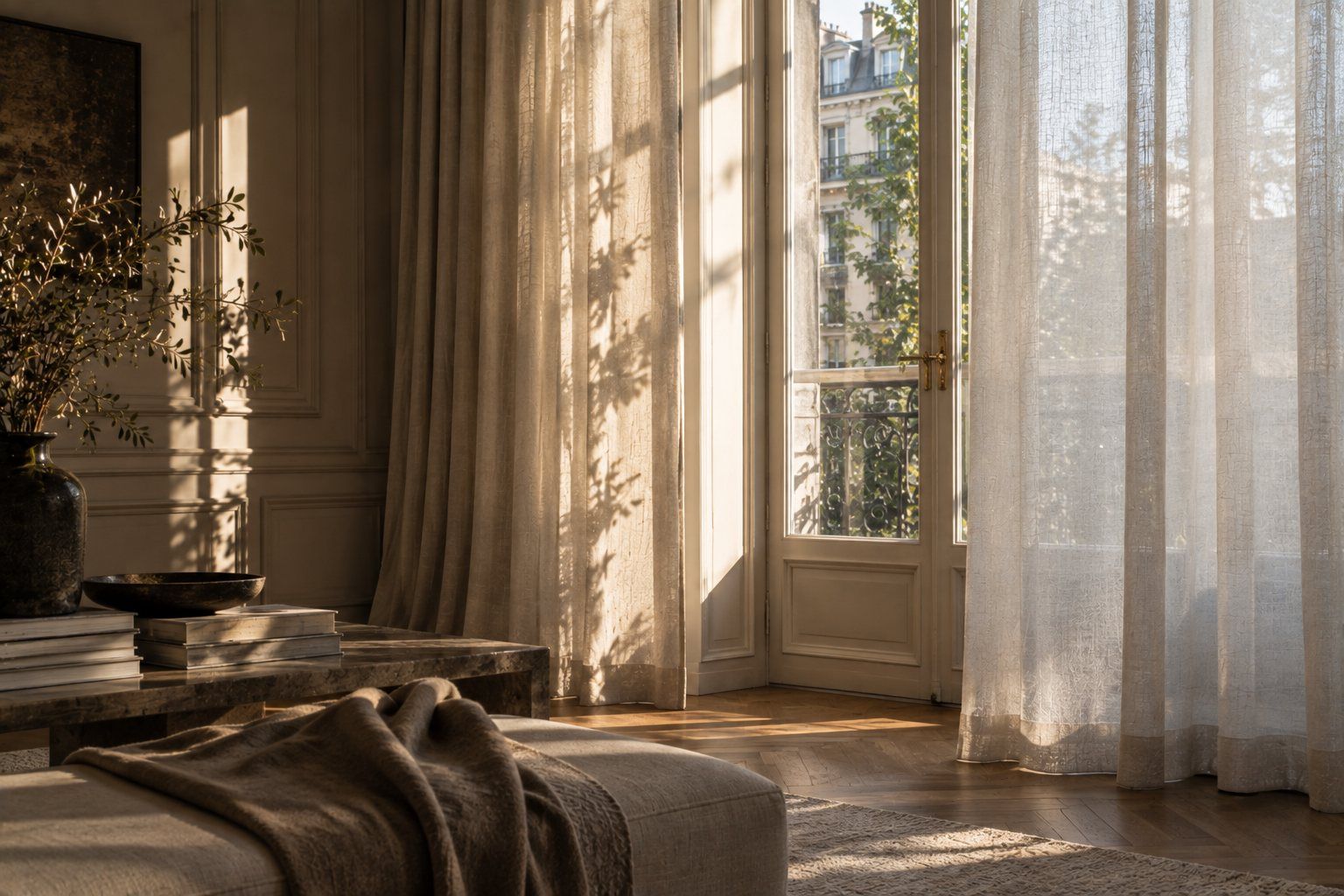
Natural light never enters a room neutrally. It shifts through the day, moves across surfaces, alters colours and creates different contrasts depending on the orientation and size of the windows.
Hanging a curtain means intervening in precisely this relationship – not merely covering a pane of glass or adding privacy, but transforming the light before it reaches the room. The fabric becomes a kind of filter through which the perception of the whole room changes. That is why the same space can look completely different simply by changing its curtains.
When light passes through fabric
A window without curtains lets in a more direct light, one that draws sharp contrasts between the areas in light and those in shadow. When a fabric is placed in front of the glass, that light meets a surface that may absorb part of it, reflect it or let it pass through.
The result depends on many things. A fine, open weave keeps more of the brightness and of the visual connection with the outdoors. A denser cloth, by contrast, makes the light progressively softer and more diffuse. The surface matters too: matt, lustrous or strongly textured materials each interact with light in their own way.
So a curtain does not act only on the amount of light in a room. Above all, it changes its character – and that is an important difference. A room can remain very bright yet lose the sense of direct, intense light it had without curtains. Shadows become less pronounced, transitions more gradual and the overall light more even.
The colour of the room can change too
When light passes through a coloured fabric, some of the material’s chromatic qualities can carry over into the light it lets into the room.
This becomes especially noticeable with lightweight curtains in direct sun. A cool white, an ivory, a beige or a deeper shade will not necessarily produce the same impression, even when their degree of transparency is similar. The light that reaches walls, floors and furniture can take on different nuances and, in turn, alter the way we perceive the colours already in the room. That is why choosing a curtain colour by looking only at a small sample laid on a table can be misleading.
A fabric intended for a window should also be seen with the light shining through it. That is the moment it reveals an essential part of how it behaves.
The same colour can also change considerably between morning and evening, or between a north-facing window and one that catches the full sun. Curtains therefore enter into a relationship not only with the room’s palette, but also with its orientation and the natural light the space receives.
A surface in constant change
Unlike many other furnishings, a curtain never looks entirely static. Over the course of the day, it changes with the light.
In the morning it may appear almost transparent; in the hours of strongest sun it may reveal more of its weave and colour; in the evening, when the light comes from inside, it can take on yet another character. The way it is made up contributes to the result as well. The amount of fabric, the depth of the folds and the distance from the window create areas of light and shade that bring movement to the surface.
It is precisely this capacity for change that makes curtains such a particular element of a scheme: they are not simply lit by the light, they take part in the way that light is perceived.
Designing a curtain means designing the light too
When choosing curtains, then, colour and fabric should not be assessed in isolation from the real conditions of the room.
A large south-facing window, a smaller north-facing one or a room with little natural light each make entirely different demands. The same fabric used in these three settings could produce equally different results.
That is why it matters to look at samples, transparencies and shades with the room’s orientation in mind, along with the surfaces already present and the effect you want at different times of day. A curtain does not simply add one more material to a room; it places itself between the light and the space. And in that very passage it can soften the light, subtly shift its tone, redraw the shadows and change the way everything around it is perceived.
In this sense, choosing curtains also means choosing the light with which we want to live in a room.