Some pieces of furniture pass through time without losing their value. An inherited armchair, a sofa whose frame is still impeccable, a pair of chairs found at an antiques market, or simply a piece that still has the right proportions for the house but no longer the look we want.
Bringing a piece back can become a genuine design choice, one that preserves its identity while placing it in an entirely new setting. This is where restoration and upholstery cease to be merely conservation work and become the means of reinterpreting what already exists.
Before changing anything, look at what is there
Not every piece necessarily deserves to be saved. The first assessment concerns what often cannot be seen: the structure.
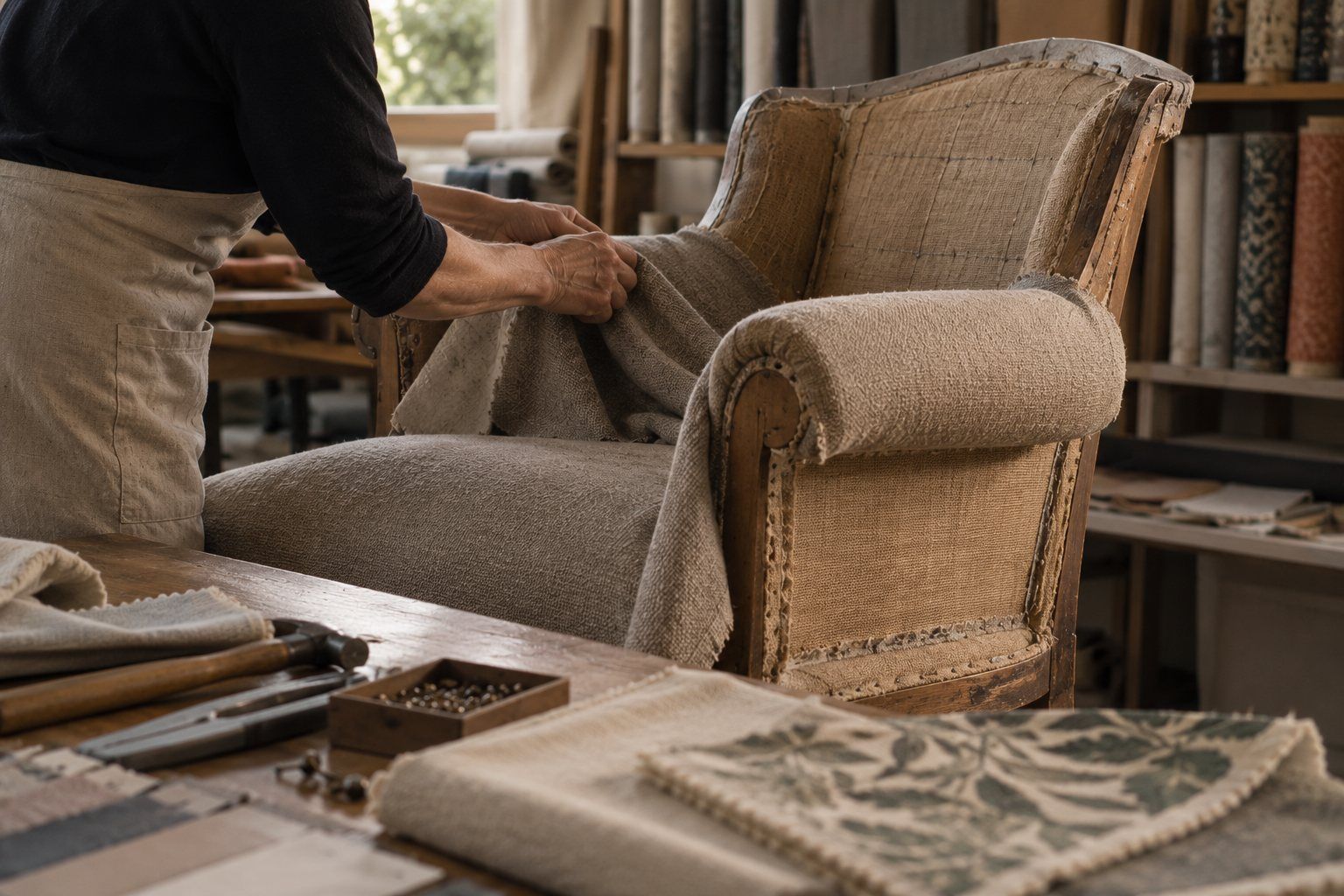
A chair built from quality materials and still sound can be an excellent starting point, even when its cover and padding are by now showing their age. Conversely, working on a piece that is structurally compromised may call for far more substantial work. That is why restoration begins even before the new fabric is chosen. It means looking at the piece, understanding how it is built, and deciding which parts can be kept and which need to be restored or replaced.
An armchair that simply looks “old” may, once stripped of its cover, reveal a frame that is still perfectly sound. And it is precisely that frame that makes it possible to imagine a second life.
Fabric can change a piece’s identity
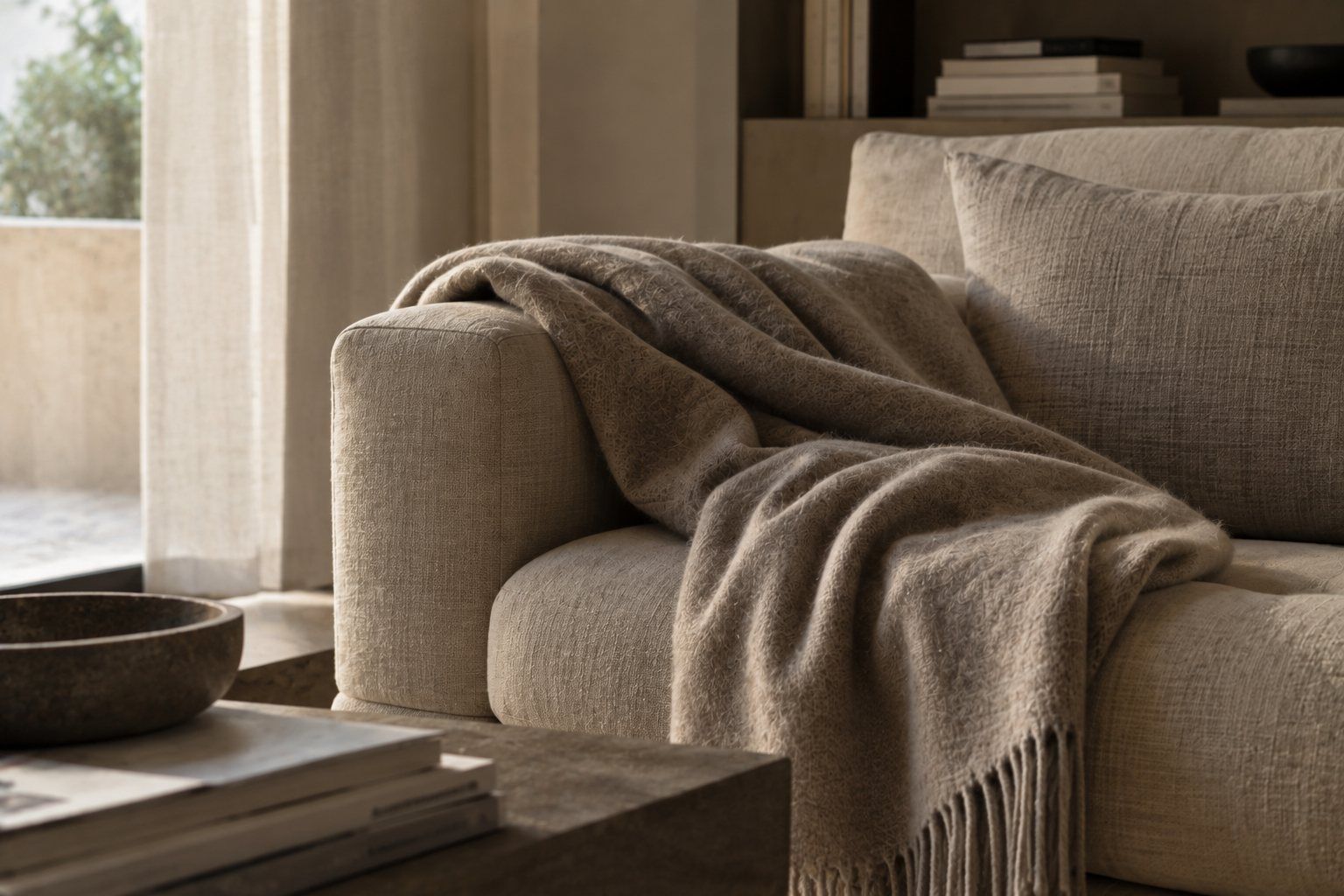
Restoring does not necessarily mean returning a piece exactly to its original appearance. A new cover can respect its character or entirely change its presence in the room. A more textured weave, an unexpected colour, a velvet, a linen or a decorative pattern can transform the way the same piece is perceived without altering its form or proportions. This is where upholstery meets interior design. Choosing the fabric is not only a question of colour. Composition, hand, weight, durability and the way the material behaves must all be weighed against the shape of the piece and the use it will be put to.
The same fabric can behave very differently on a seat with taut, tailored lines than on a soft, enveloping armchair. Designs and patterns call for care with repeats and joins, while certain techniques may require materials with specific properties.
That is why re-covering a piece of furniture is not simply a matter of swapping one cloth for another: it means choosing a new surface for an object that will go on being part of the space.
Preserve, transform, continue
There is also a less visible value, yet one that is often decisive. Some pieces have a history.
They may have been in the family for generations, be tied to a previous home, or be a piece chosen many years ago that one has no wish to part with. In other cases there is no emotional attachment at all: the form, the quality of construction and the proportions simply still work.
Restoration makes it possible to keep all this without giving up a contemporary language.
A well-conceived intervention can keep the original identity recognisable, or create a deliberate contrast between a form from the past and a fabric of today. And it is often precisely this layering of different eras that makes an interior more personal.
It also means stepping away from the idea that every change to the home must necessarily involve buying something new. What has been well made can evolve. In our workshop, every restoration starts from the existing piece itself: its structure, its condition and what you hope to achieve. From the initial assessment to the choice of fabric, through to the work itself and the final covering, every step is defined for that individual piece.
Because giving a piece of furniture a second life does not simply mean returning it to how it was. Sometimes it means allowing it to become something new, without losing what was worth keeping.